
MARS & BEYOND
THE ROAD TO MAKING HUMANITY MULTIPLANETARY
A CITY ON MARS
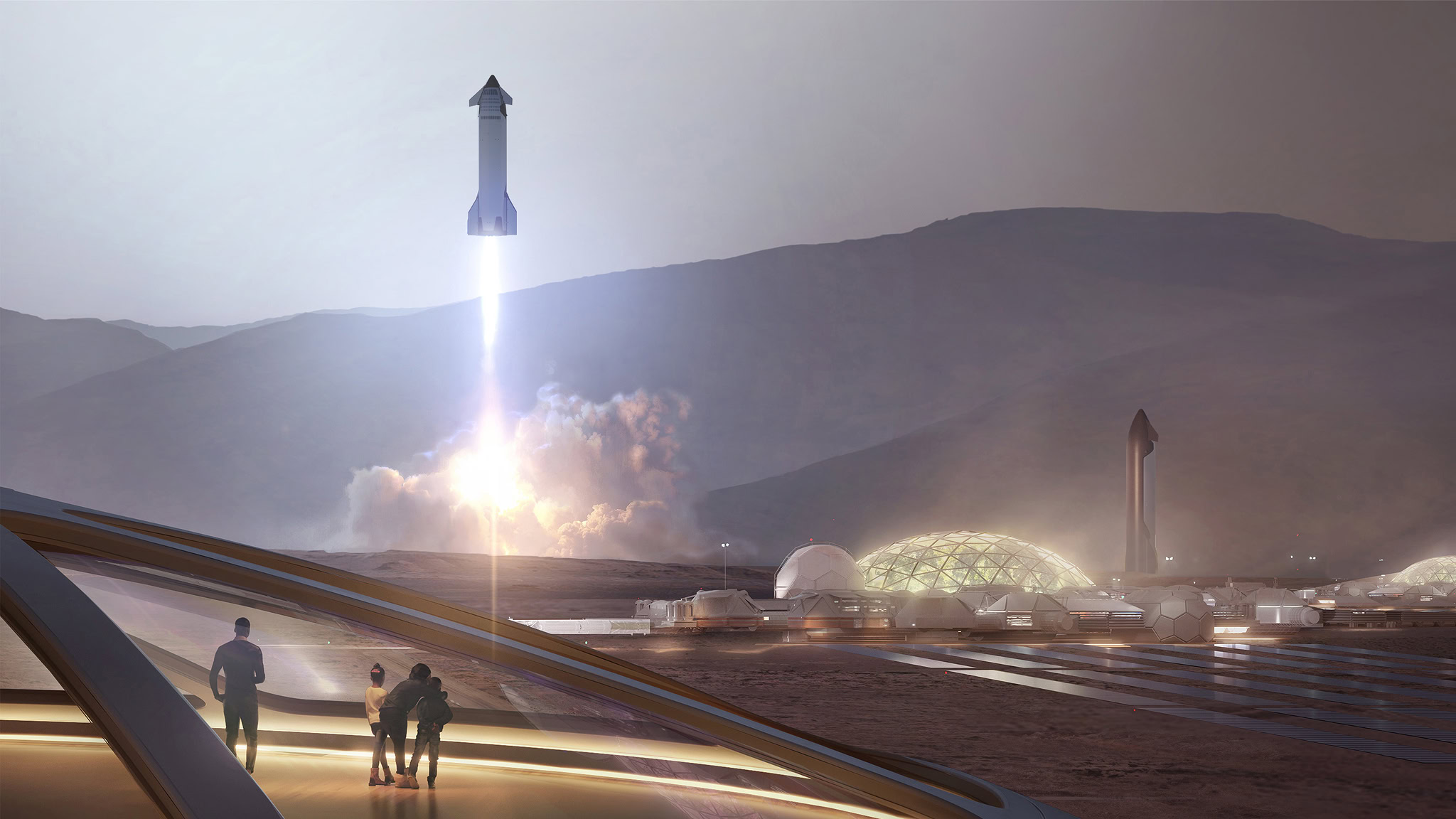
Establishing a self-sufficient city on Mars will require upwards of one million people and millions of tonnes of cargo to be delivered to the Red Planet. By launching more than 10 times per day to maximize transfer windows that open up every approximately 26 months, several thousand Starships will ultimately transfer crew and equipment to build a lasting presence on another world.
WHY MARS?
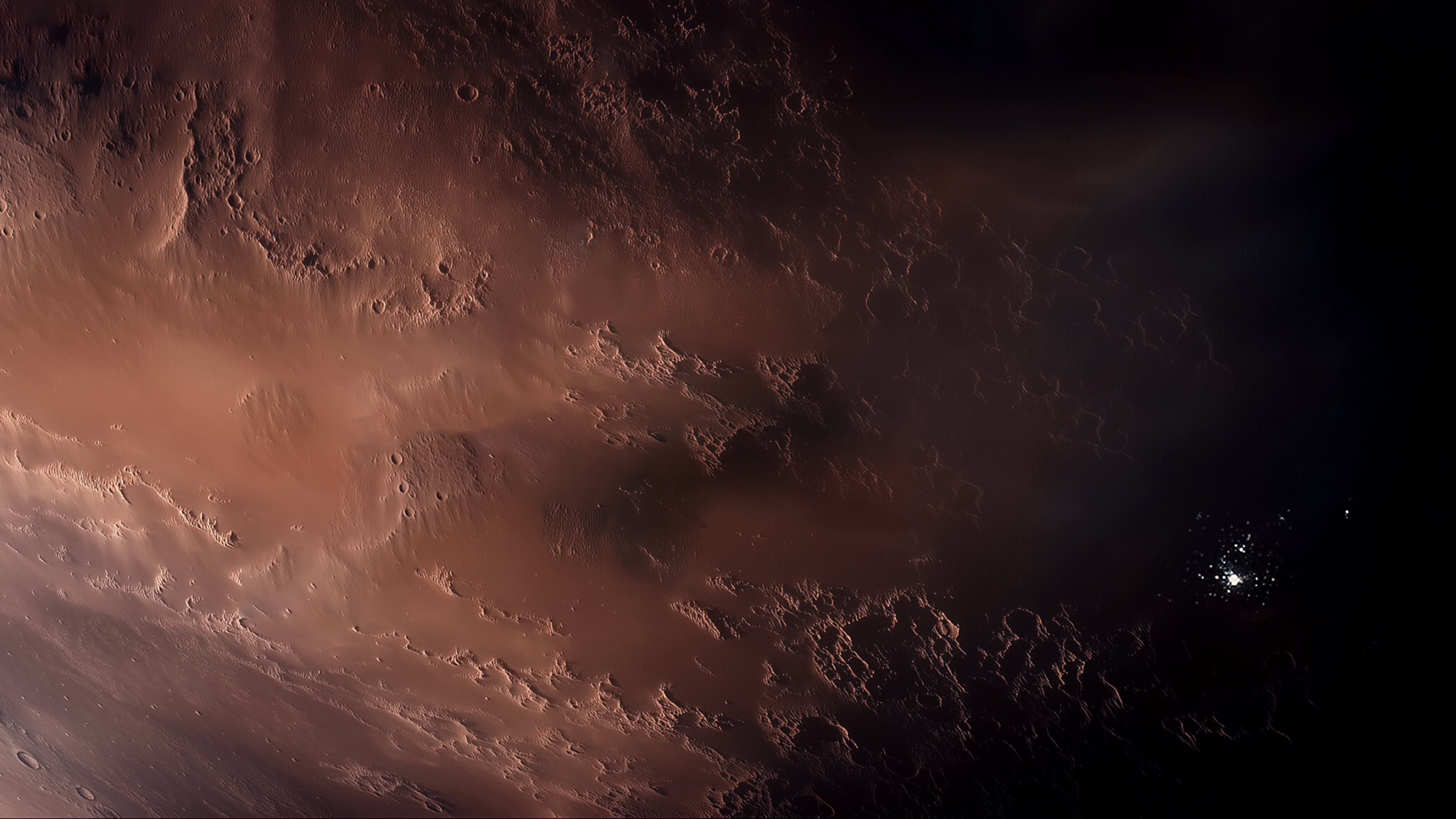
At an average distance of 140 million miles, Mars is one of Earth’s closest habitable neighbors. Mars is about half again as far from the Sun as Earth is, so it still has decent sunlight. It is a little cold, but we can warm it up. Its atmosphere is primarily CO₂ with some nitrogen and argon and a few other trace elements, which means that we can grow plants on Mars just by compressing the atmosphere. Gravity on Mars is about 38% of that of Earth, so you would be able to lift heavy things and bound around. Furthermore, the day is remarkably close to that of Earth.
6
MONTHS TO GET TO MARS
2
MOONS
14
ORBITING SATELLITES
STARSHIP
SpaceX's Starship spacecraft and Super Heavy rocket - collectively referred to as Starship - represent a fully reusable transportation system designed to carry both crew and cargo to Earth orbit, the Moon, Mars and beyond. Starship is the world's most powerful launch vehicle ever developed, capable of carrying up to 150 metric tonnes fully reusable and 250 metric tonnes expendable.
LANDING ON MARS
Starship will enter Mars' atmosphere at 7.5 kilometers per second and decelerate aerodynamically. The vehicle's heatshield is designed to withstand multiple entries, but given that the vehicle coming into Mars' atmosphere experiences higher levels of atomic oxygen, we expect to see harsher conditions during entry. The engineering video below shows actual Starship heatshield materials being tested in a simulated Mars atmosphere.
WATCH VIDEOMARS 2026
SpaceX is planning to launch the first Starships to Mars in 2026. These first vehicles will gather critical data on entry and landing, serving as the forerunners to future crew and cargo deliveries to the Martian surface.
MARCH PRESENTATIONMARS MISSIONS
Sharing cargo flights to the Martian surface for research, development, and exploratory missions start in 2030, at a rate of $100 million per metric ton.
For additional information on payload masses, pricing details, and timelines, please contact sales@spacex.com.
FIRST HUMANS ON
MARS
The first human explorers to visit Mars will lay the groundwork for permanent presence on the surface. Their mission objectives will include surveying local resources, preparing landing surfaces, setting up power generation, and building habitats.
BUILDING A CITY
Key technologies are required to establish a permanent home on Mars and provide opportunities for those on Earth to take part in making life multiplanetary. New industries will be needed for fields including power generation, resource mining, propellant production, construction, communication, and transportation.